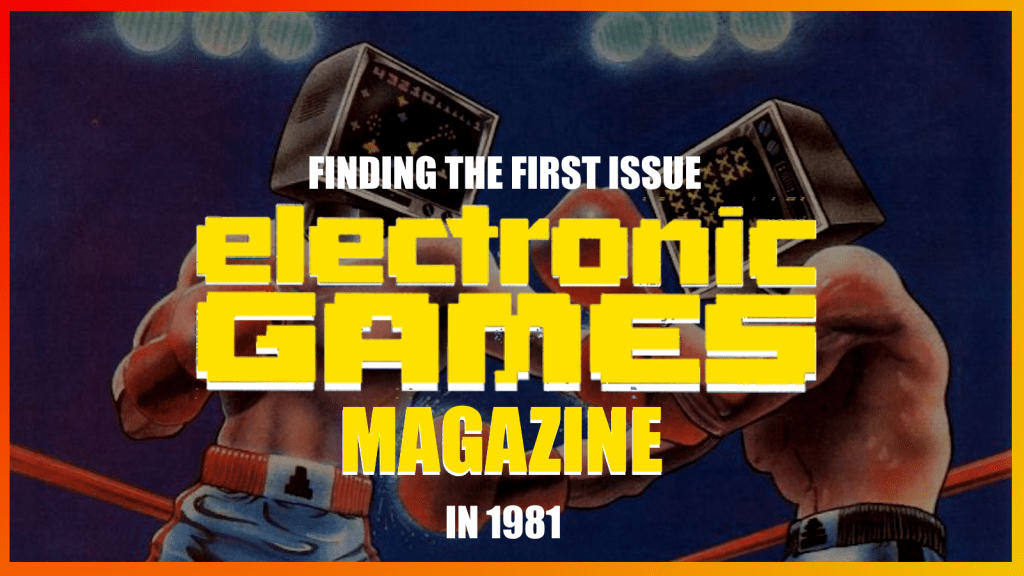
Throughout the 70’s and early 80’s, our house existed on the kind of gender divide that had been common-place for centuries: My dad worked full-time as a draftsman for an aerospace company, and my mom worked full-time as housewife ( with a part-time job as a teacher’s aide). Nowhere was this more apparent than in our end of week ritual. In the late afternoon my dad would arrive home from work with his weekly paycheck cashed and ready for the weekend. He would lay the crisp $20 bills on his bed, one by one, dividing up what my mom would get for the “house” , what he would “sock away” for whatever it was that he was socking-money-away for that month, be it Motocross bikes, Civil War memorabilia, metal detectors, or whatever.
The most momentous portion of this ritual was the final act. My dad kept eight $1.00 bills separated from the rest. If we had “earned” it that week (or rather, “not lost it” by being “foo foo panty waists”), he would dole-out these bills evenly as weekly allowance for each of his four kids.
With the house-money firmly placed in her well-loved red, pleather purse my mom, Jeff and I would head-out to our sea-blue 1976, Datsun 710 station wagon with the primered left-back-end from the accident in 1978, to begin the weekly shopping sojourn to Lucky’s Supermarket.
Even though this event had an air of the ordinary, my brother and I were genuinely excited about the trip. The $1 bills burning holes in our O.P. velcro ripper wallets would soon be put to good use: Mad Magazine, $.08 cent Shasta Cola, dominos, plastic army men, sugar free gum, Topps trading cards and/or whatever other contraband we could afford and hide in our OP pockets when we got home. These things would get us through the weekend of broadcast TV and lamenting about the seeming impossibility of getting an Atari VCS video game system for this upcoming, or any Christmas.
On one particular Friday night in the autumn of 1981, after we had helped our mom select the weekly food allotment, Jeff and I snuck to the magazine rack to try the MAD fold-in and see if the current issue was worth buying. On that night in particular before my eyes could reach the cover of MAD, they fixed on something totally unexpected. sitting right next to the new issue of G.A.M.E.S was a new magazine that I had never seen before with the intriguing “electronic GAMES” and the subtitle “Video games-Computer Games-Stand Alone Games -Arcades”

I quickly grabbed the magazine and started paging through it, which was not my usual course of action. It was common knowledge then that browsing at the magazine rack was a bit of a sordid endeavor usually saved for homeless people and dudes trying to sneak a look at Playboy or Penthouse. However, the appearance of “electronic GAMES” changed all the rules.

I opened the magazine immediately to an advertisement from Activision for Tennis. This seemingly innocuous event had a fairly huge impact one me at the time. The name “Atari”, synonymous with “video games” in my head for several years, now made room for “Activision”.
I had no clue what the size of either company was, and it did not matter. In an instant, the size and scope of the virtual Atari VCS video game world expanded two-fold. At the same time, the game “Tennis” looked amazing. Gone were the simple rectangles and squares on the flat symmetrical screen used to simulate sports in Atari VCS games like Street Racer or Video Olympics. Here was a game that had fully realized characters and a 3D tennis court.
I scanned a few more random pages and my cognition of the virtual world of video games multiplied each time. Each advertisement made a strong and lasting impression.
George Plimpton showing MLB Baseball for Intellivision Intelligent Television from Mattel, the company located down the street from me in Hawthorne, CA who created one of the first loves of my kid life: Hot Wheels.
A pencil drawn Godzilla advertising Crush Crumble And Chomp from a company with a name that implied massive scope: Epyx.
A game named Quest For The Rings for the Odyssey2, that looked like a combination of board game and computer game, with illustrations that reminded me of Ralph Bakshi’s cartoon version of The Hobbit, a fantasy realm of unthinkable size and scope.
It was almost too much to handle. This was like having all the stuff on the walls at HW computers in a magazine. More than even the HW Computers catalog I had in my room.
I felt my breath get short, heart quickening, and the overwhelming sense that I’d been missing something.
Where did all this come from? Where was I?
Again, just like that day at HW Computers, I suddenly felt out of touch.
I played Atari at Carries’ houses years ago. I played it at Fedmart and Target. I played Asteroids, Missile Command, Centipede, Space Invaders and Pac-Man in Poway, at Castle Park, at Safeway and Straw Hat Pizza.
I knew the Intellivision existed because my friend Eric had one. I knew you could play games and program on an Apple IIe because Eric had one of those too.
I knew you could get an IBM PC to play games like Olympic Decathlon, because my friend Wesley had one. He also had Fairchild Channel F with it’s weird pump-like controllers.
I also knew Atari computers existed, and I knew I wanted one and that Asteroids was coming out for the Atari VCS and I needed it and a VCS that Christmas. I thought I had a handle on the world of videogames, and I was so so wrong. A nearly 100 page magazine filled with news and reviews about video and computer games was another thing entirely.
It was overwhelming.
I thought I was as up to date on my video game knowledge as any 11-year old could possibly be in 1981. Video game knowledge was hard to come by in 1981. None of this appeared in the pages of Boy’s Life or AYSOccer Now. The only other magazines I’d read on a regular basis in my entire life. I seem to recall an ad for video games in GAMES magazine, but that was about it.
I was lost in those few moments at the magazine stand.
I could not believe what I held in my hands.
Cognizant that paging through magazines at Lucky’s was a frowned-up activity, I closed Electronic Games, but didn’t put it back on the rack.
In a daze, I held the magazine in my hands and looked at the cover.
“electronic GAMES”
The name held so much promise. The world “GAMES”: When you are 11 years old, Is there a better word in the English language? “electronic”: the word seemed so space-aged, and so advanced. For years, my brother and I tried making our own games to fill the void of not having our own Atari VCS. The aforementioned Etch-A-Sketch hack and rubber band pinball games for example. But our actual ownership of “electronics” had been quite minimal, which made the title all-the-more alluring.
The few games we had that were “electronic”, were very limited in scope: Some blinking red LEDs, beeps, and colorful buttons, but most of the “game” played out in your mind as opposed to in your hands.
By contrast, Nothing about “electronic GAMES” magazine appeared this limited in scope, ancient or broken in any way. It felt wide-open, and huge, like a kingdom of vast riches laid before us. At that historic moment, in the magazine section of Lucky’s supermarket, next to the party favors and greeting cards, across from the vegetable sprayer, all I cared about was the fact that I was holding the future in my very hands.
I kept looking at the cover thirsting for more and more. I knew that at any given moment, my mom could call us to leave the store, and we’d have to leave the magazine behind. There was no way such a practical woman, who had often eaten ketchup and salt soup as a little girl in great depression, would let us waste $2.95 on a magazine about video games.
Just the thought of asking her seemed silly.
However, when she finally called us to the check-out line, we arrived with the copy “Electronic Games” in-hand. Any thoughts of sneaking it through unseen were lost when she deftly asked me to show her what was clenched in the hand hidden behind my back. Her initial reaction to the magazine was mild horror, mixed with disgust. (the same reaction I had received in 1978 when I suggested I buy 10 packs of $.10 “Star Wars” Blue Series 1 trading cards for Jeff for our birthday). Surprisingly though, she gave–in quite easily this time, and I’ve always wondered why.
Until the day she died my mom never understood the appeal of video games or computers so I certainly was not the subject matter of the magazine. Maybe she saw and understood how much it meant to us? Or maybe it was something much more personal.
Now that I’ve been a parent for 20 years, I’m aware now of an obvious reality that doesn’t show its face until it’s too late for you to control. It’s this:
There is an inflexion point in the life of a parent’s when they realize the diminishing value of trying to mold children into their own image. After you’ve introduced kids to your favorite toys, played your favorite games, listened to your favorite songs, had them watch all your movies, read them the books you loved, introduced them to your religion, your values, and your take on the world, it’s time to take a step back.
You realize pushing any further might just send them off the edge.
So, for better or worse, you stop trying.
I think, for my mom, this might have been one of those moments. She’d done her job. We weren’t bad kids.
We did okay in school, rarely got in trouble, and we didn’t really complain about our family circumstances. It was what it was.
We just loved video games, or at least the idea of them, and they were a thing she never needed, never wanted, and never imagined would exist.
But she could not hold us back any longer, so she relented.
The magazine was allowed on the checkout conveyor belt.
A moment burned into my mind that I will never forget.
My brother and I split the cost of the magazine and took it home.
We helped my mom bring the grocery bags into the house, then we went to our room and dove in.
I sat on the edge of my bed .
Jeff pushed over my shoulder so he could look as well.
And entered the world of Electronic Games..
First, I turned past the first page ads and table of context, and fixed my eyes on these words in the editorial written by someone named “Frank Laney Jr.”:

“Did you know that you’re a member of the world’s fastest-growing hobby group?”
No, as a matter of fact, I had no idea.
In fact, I’d never really felt “part” of anything before. Well, OK, soccer and baseball teams maybe, but they were short-lived: as soon as the season was over, so was the camaraderie. The one time we stood in-line to see Darth Vader, Chewbacca and Stormtrooper parade through Toys R’ Us in September 1977 felt a bit like camaraderie, maybe, at least for a couple hours.
But this seemed completely different. Maybe because I was older, or because this video game magazine seemed so professional, but to me, Star Wars would always be kid stuff, and video games, they were serious. This was my future I was holding in my hands.
I continued to read.
“It’s true. Although the first Pong machine made its debut only a decade ago, today more than five million Americans regularly play electronic games. The introduction of space-age electronic amusements amounts to nothing less than an entertainment revolution.”
A “member” of a “revolution”? I had never thought it was possible.
I watched other “revolutions” pass me by.
TV shows kept telling me that the 60’s was a “counter-culture” revolution, but I was born too late.
The punk rock scene my sisters were so involved in, appeared to be a revolution, but I was too young for it as well.
Was this “our” revolution? The one we were born into?
My brother and I kept reading, traded turns reading/looking over the other guy’s shoulder for most of the weekend.
Every page held a treasure-trove of wonder and interest.
The first image in the magazine that caught my attention was this Atari advertisement, about three pages in. It showed a s stack of brightly colored Atari VCS game boxes almost 3 feet high, with the words “Atari, there’s no comparing it with any other video game”

The stack of Atari games looked immense. When I played The Atari VCS at my Carrie’s house, she had about a dozen games. I’d played at Fedmart in the TV section, but they only had Combat! And Breakout and a few others on display. I never had any idea that there were so many games for the Atari VCS. So many in fact, that the colored boxes could form a complete rainbow.
I was blown away.

Did all this stuff really exist?
We were not complete virgins when it came to video games, but who knew the available information about them could fill an entire magazine? It was a whole world we had been missing, and neither of us wanted to waste another second standing by it’s edge: we wanted to jump in feet first and never look back.
We missed the new episodes of “The Incredible Hulk” and “Dukes Of Hazzard” that night. Friday TV just could not hold a candle to our new discovery. To be honest, TV itself would never quite hold the same fascination ever again. Well, not static, boring, non-interactive broadcast channels anyway.
We drank-in the full-color pages, the reviews, and previews, the articles, and the advertisements.
And it was at that point, Electronic Games became my bible.
A living document of the future, held in my hands and read one page at a time.
I think to myself, seeing all of this, I realized that In the pages of this first issue of Electronic Games, the hobby of video games was born.
Electronic Games truly were revolutionary.
It was the first of its kind: a monthly publication dedicated to video games and the video game phenomena. The Magazine started as a series of “Arcade Alley” columns in Video Magazine in the 1980 written by Bill Kunkel and Arnie Katz and championed by Bruce Apar, editor for Video Magazine. Katz and Kunkel were friends since the early 70’s, turning their passion for pro wrestling into a radio show, and one of the first Pro Wrestling magazines. When that failed to catch on, they wanted to try to make a living at something “fun”. The seed of that idea blossomed into “Arcade Alley”, this success of which proved to Reese Publications (the publisher of Video) that a video game magazine might have a chance for success. Kunkel and Katz pitched the idea, and before the end of 1981, they had their first issue published.
By 1982, Electronic Games became THE authority on video games, and along with it, writers Arnie Katz, Bill Kunkel, and Katz’s girlfriend Joyce Worley, became household names to video game fans everywhere. The basic design of Electronic Games (editorial, news, letters, previews, reviews, strategy) was copied by every major video game publication that followed, and the structure can still be seen today in most video game and computer game magazines.
Before finding ‘Electronic Games’ we were both interested in anything that had to do with video games, however, there just was not that much information to have. if information was available, it was either negative, misleading, or patently incorrect. We were constantly told by the TV news that video games were ‘just a fad’ and they would soon disappear.
Adults were even scared of video games. Soon, the parents in our city would rise-up to fight the opening of a themed arcade/restaurant named ‘Magic Pizza’ because of the ‘bad element’ video games were sure to attract.
Even our parents, who were otherwise cool in so many ways, had a tough time understanding why we wanted an Atari VCS and what it meant to us
If we listened to others, video games were a flash-in-pan bad habit sure to rot our brains as well as our teeth. They were every GF Cravenson had written about to the New York times.
In our hearts we knew video games were fun and cool, however, we had no solid proof except for our own personal feelings.
Now we had it.
“Electronic Games” magazine became that proof.
Mom had given-in and let us buy it, and our dad started to act genuinely interested in our fascination after seeing it. The magazine was printed vindication for a couple of 11-year-olds whose infatuation started 1977 with ‘Combat’ and had gradually built every year since.
The irony is that while we had been exposed extensively to video games and electronic entertainment in the past, it took a printed magazine, a technology roughly ‘ millenium long-in-the-tooth, to make it all seem real.
Other magazines followed into 1982 and 1983: Video Games, Electronic Fun and Joystik and Atari’s own publication, Atari Age, just to name a few These enthusiastic glossies served as counterpoint, OUR counterpoint, to the news stories that were so often negative and used to grab people with misleading headlines.
Within days of finding E;ectronic Games on the newsstand, we were hinting that an Atari VCS would be the perfect Christmas gift and for no logical reason, the prospects of seeing one under the Christmas tree no longer seemed all that impossible after all.
When the Atari VCS arrived that Christmas, complete with a Breakout! Cartridge, it felt weird. I was very happy, but it felt like something else.
It felt like fate.
—
I recently purchased a lot of 10 Electronic Games Magazine issues from eBay. I have digital copies socked away on my PC, but for some reason, I had the urge to hold the magazine in my hands, turn the pages, and feel the glossy paper on my fingers once again.
I had returned to Electronic Games magazine every month for 3 and a 1/2 years after I first bought it in 1981. In its pages, my childhood obsession was documented. The ups and downs of the industry, console releases, and new game reviews. In those pages I learned about The Atari System X (5200), Atari 7800 Pro System, I read previews for the movie Tron, salivated over the ColecoVision, and was blown completely away by the GCE Vectrex. It was also in those pages that I read about “the great video game shakeout”, saw a Space Ace, the laserdisc game for the first time, and learned that home computers were the next big thing.
Then, in early 1985, it all went away too.
The visionaries of the magazine, Arnie Katz, Bill Kunkle and Joyce Worley were fired in late 1984, their final articles burned off until the magazine changed its name to “Computers And Video Games” before ceasing publication entirely a couple issues later. My old issues of Electronic Games were put into my footlocker and mostly forgotten, then lost to time itself.
When I opened the package, the physicalness of the magazine shocked me. Turning the pages no longer felt like a simple romp through the past. In the 35 years since I’d held an issue of Electronic Games in my hands, it’s importance has become the stuff of legend to me. In my head it’s been vaulted to a place of grand meaning, next to other glorified kid experiences like playing Atari, seeing Star Wars, and riding a skateboard for the first time.
But reading the magazine in 2022, the significance had shifted. I used to consider Electronic Games magazine a landmark for the whole world, and in some ways I still do. However, the importance that shocked me, the one that hit me as I sat on our seldom used family couch turning the pages of those 10 magazines from eBay, was much more personal.
It became clear to me that I can only try so hard, through articles, blogs and podcasts, to explain and show the implications of the golden age of video games to the generations that followed mine. At some point, I have to look inward. If younger generations don’t get it, does it still matter? Maybe. It matters to me anyway. As I turned each page, I was reminded of news and products and people that have long since passed from history. Their meaning lost in an era that was buried figuratively by time, and quite literally in Alamogordo Texas (look it up). To me those pages are now like pages in a photo album. Their significance changes over time as I grow and change, and alter my perception as the years pile on.
In hindsight, it was such a short time. I blip in my life really. Why is it so important? Why do I feel drawn back to the pages of Electronic Games Magazine, and to the journalists, like Arnie Katz, Bill Kunkel and Joyce Worley, the ones who documented the era in real time?
I suppose because it was an era that feels like it ended before its time.


 intotheverticalblank.com
Leave a reply to itvbadmin Cancel reply